
Why I Hid My Anxiety From Everyone For Years
Disclosure: Some of the links below are affiliate links, meaning that I will earn a small commission if you click through and make a purchase at no additional cost. All opinions remain my own. For more information, please refer to my disclosure policy. Finally, I want to thank the blogger behind Mommy Conquering Anxiety for sharing this personal story on anxiety and her experience dealing with it.
In this guest post, the author shares their personal experience with anxiety and why they chose to hide it for so long, hoping to help others going through the same thing.
Note: I am not a mental health professional. The information presented in this article should not be used for self-diagnosis or to replace a medical diagnosis from a mental health professional or your primary care physician. The following information is for educational purposes only.
The stigma surrounding mental illness in the UK is still prevalent.
If someone had a broken leg, you wouldn’t ask them to prove the level of pain they were in or justify they were telling the truth. But, arguably, when your mind malfunctions, everything is affected. So, indeed, it’s the one thing we need to look after, and we should listen to anyone who says they are suffering mentally.
Unfortunately, from what I see on social media and my experience over the last four months, there is still work to be done in this area. Mentally ill people shouldn’t face judgment while battling some pretty dark times. But it seems even the people who should be helping us are sometimes judging us. So, where do we go from here?
I hope we can collectively make a difference. Then, in time, people with mental illness will feel supported and openly talk about their struggles without fear or judgment.
My Anxiety Condition Over The Last 15 Years
I’ve suffered from anxiety issues for at least 15 years. Looking back, it’s like my brain ignored it was even happening. The only way I could function was to put on a mask daily and work through it. I was sticking a plaster on the wound and using medication to get through the day.
I now know this isn’t the only way to deal with a mental health problem following my breakdown. There are other, more productive ways to acknowledge what’s happening.
I hid the full extent of my panic attacks, depression, and daily anxiety from family, friends, and even boyfriends. Everyone just thought I was a fierce and unstable young woman and that I had some growing up to do. Even I put it down to being headstrong, career-driven, and motivated. At this point, I think that’s who I still am, but this was a front to hide the pain and the constant battle inside my head.
Until now, I didn’t realize there is a fine line between being superwoman 24/07 and this quickly leading to unhealthy habits, which cause abnormal anxiety levels. Constantly putting on a brave face is exhausting and will eat away at you over a prolonged period. This is because you are essentially telling yourself and everyone around you lies.
Normal Anxiety Levels VS. Out Of Control Anxiety
Inevitably, we will all experience some level of anxiety. However, this life-saving mechanism exists for a reason—a primal instinct designed to protect us. Unfortunately, when you live with out-of-control anxiety issues for 15 years, that’s a whole different ball game. One I don’t want to play anymore.
The Signs I Ignored
When I failed miserably at university interviews, I blamed my anxiety. I was a shy person, I told myself. This was not the opportunity for me. Looking back, maybe it was; perhaps it wasn’t. I will never know whether my anxiety stopped me from taking chances, but it doesn’t matter now.
My driving instructor advised me to get beta-blockers from the doctor because I was “making silly mistakes and panicking” during my driving test. As soon as I took the beta blockers, I passed the third time. A considerable confidence knock, not to mention the money wasted.
This was a pattern I saw throughout my period of denial.
When I was younger, I was labeled the party animal of the group. I would drink alcohol and take recreational drugs to fit in, reduce the panic, blur the background noise, or the impact of being around too many people would have on me.
I loved going out with friends, but doing it zapped my energy, and I became frustrated.
Recent Years
Fast-forward to the height of my career, and the physical manifestations were unbearable. I would fall apart in meetings. I knew I could speak and was learning to do so, but I would overthink so much that sometimes I couldn’t string a sentence together.
The physical manifestations were sweating, mumbling, and a rash that would rise to my chest, which was visible to everyone in the room. Finally, I would leave the meeting feeling ashamed and inadequate and sit in the toilet for 20 minutes, trying to calm myself down.
I googled techniques to bring myself back, including running cold water on my wrists to eradicate the rash. The whole time I was locked in the toilet, I was worried about what other people thought or if anyone would think I’d been gone for too long. I am surprised I even managed to calm myself down. I felt like running out of the door and all the way home.
I would walk back to my desk, thinking everyone was staring at me. I was embarrassed, ashamed, and worn out. I needed a lie-down, not another five hours at work, wondering what everyone thought about me.
When my anxiety was terrible, this would happen at least three times a week. It became the norm for me. I asked the doctor for beta-blockers to help, but the issue then became a lack of communication from management about when the meeting would occur. Then the anxious voice in my head started asking when the right time to take the tablet was, now, later, and the worry about lack of routine or direction in the workplace set in. I was out of control but pretending to be in control.
Some people reading this might ask why I didn’t leave the meeting room or tell someone I was suffering. My anxiety told me I was a failure, a quitter; I had a point to prove, and leaving the room would mean telling people the truth. If I did that, they would know I couldn’t do my job, there was something wrong with me, and they would find out.
I know it sounds crazy, but I was in the habit of thinking like this to survive in the workplace. The worst thing in the world would have been to tell a management team I felt didn’t support me.
What Other People Thought Of My Erratic Behavior
Work colleagues
I tried not to care too much about what people at work thought. I did the job and came home. The daily struggle I dealt with in my head was exhausting enough. I functioned well at work despite always suffering from my anxiety.
Family & friends
When it came to my family and friends, I think they knew I suffered from overthinking. They thought I was sensitive, maybe introverted, and they probably thought these personality traits caused my erratic behavior.
When I had a panic attack on a plane journey home from Lanzarote, my mum and dad sat behind me. I think they were shocked. I was shocked. It creeps upon you, and you feel like you’re dying and will never catch your breath again. Not only do you feel like this, but it’s happening in an enclosed space, in front of hundreds of judgemental strangers.
I recently shared the full extent of the impact I’ve suffered over the years and my mum, who I’m very close to, and see 2-3 times a week. She responded that she didn’t know the extent of the problem. She wouldn’t guess I’d felt like this from how I had behaved.
In this respect, it’s easy to see why nobody at work thought to ask how I was.
The Rationale Behind Hiding My Anxiety
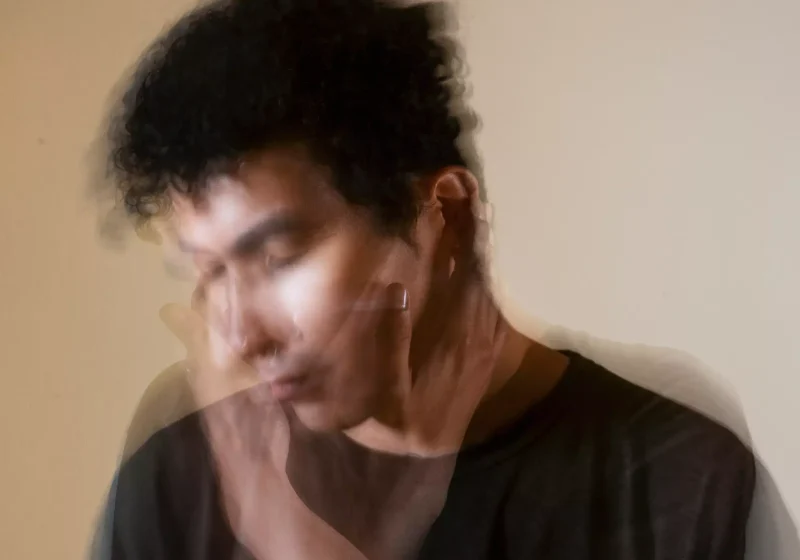
While my symptoms would have probably eased by letting people in, I also wouldn’t let the anxiety win, admit defeat, or let it impact my job. Because I am strong-minded, a massive part of me wanted to get on with my job and not give in to this negative voice.
What I’ve Learned During My Recovery
I have mixed emotions about whether this is a good strategy or not. I don’t regret the path I’ve taken up to now, but at the same time, I see a better, more honest way of living moving forward. No more masks. It’s too exhausting. What do I have to lose by being honest with those around me? This is my life. It’s the truth to say I struggle. Why hide it?
You can only wear the mask for so long, anyway. Everyone has a breaking point, and I genuinely think everyone reaches a point where honesty prevails, whatever it is in life you’re hiding from.
I now ask myself if hiding it for years contributed to my recent breakdown. I wonder what factors caused this to happen to me. But questioning past decisions feeds into unhealthy anxiety levels and gets you nowhere. So, I refuse to entertain the negative thoughts in my head or dwell on things outside my control.
It doesn’t matter what brought me to this point. What matters the most now are the tools I put in place to prevent this from happening again.
Nobody realizes that some people expend tremendous energy merely to be normal.
Albert Camus
Who Am I Now
This is a question I haven’t yet fully answered. I am only just starting to ask myself it after four months of being unable to function correctly. However, I know I will never be the person I was before this breakdown, which is good. So, I am hoping I will be a more honest, open, and happy person.
I wonder whether my personality traits are genuine or if some were a defense mechanism. Don’t get me wrong, I AM strong-minded (god knows where I would be without that trait!), but where does my personality stop, and my defensiveness take over? This is what I need to figure out.
How many people have I pushed away over the years, and how many would I have outgrown anyway? Unfortunately, Unfortunately, I will never know the answer to this. Luckily, I didn’t find my Mr. Right or my happy ever after (sarcasm – I don’t think there is such a thing. There is such a thing as two people working hard to stay together) until I was in my 30s. After that, I needed time to figure out who I was, and I’m still doing that now.
We are all a work in progress; that is how it should be. We need to learn to be kinder to ourselves and less critical.
How This Journey Helped Me
Being honest about my mental health struggles has set me free – a weight lifted, and I feel better knowing my friends and family can now understand where I’m coming from, a bit more than they did before.
They may never understand what it physically feels like to have a panic attack. Still, if I’m angry or short with them, they might realize much more is happening in my head, and sometimes I can’t communicate effectively. And that’s just who I am.
Hopefully, they will understand I may have to cancel plans at the last minute to preserve my energy and protect my mental health. It’s now time to put the tools in place to avoid this in the future. And if it does happen again, I know I can survive and what action to take to get through a down period.
I never want to feel like I do right now, ever again. So, I aim to look after my mental health daily, whether I feel well or not.
Final Thoughts
If you are suffering and feel able to, please be honest with your family and friends about your feelings. I understand it isn’t easy, but opening up to the right people has helped me.

Mommy Conquering Anxiety
Mommy & Blogger
I am a mummy to one feisty toddler and wife to a wonderful man. I live in the North of England, UK, and prioritize enjoying life every second we spend together as a family. You will usually find me writing anything from lists to blog posts and excited by stationery – show me your post-its! Following my recent breakdown, I believe talking about our struggles is the key to recovery. I started the blog because I felt compelled to share my story & my main goal is to help others.


I’ve hid my mental health issues from various different people for decades. Although I told my mum, but then I wanted her to know how much my childhood fucked me over, but she didn’t care
Hello,
I’m sorry that she dismissed you. No one deserves that. Your mental health matters and she should respect that.
Thank you so much for sharing! I’ve known so many people who hid their mental health issues and it’s so appalling to me that society hasn’t made mental health awareness the norm, especially when the majority of the population struggles with anxiety.
Katrina,
I agree so much with what you said. So many people struggle with this yet we still live in a world where people are dismissed or treated differently for it.
My anxiety has been like the ugly step sister from Cinderella for the past 4 years. It’s recently gotten better since I’ve managed to start focusing on things that were actually in my control. I started to get back into my favorite hobby or makeup and writing to help lift my spirits and silence the negative depressing talk . I actually did an article on it too! So I can definately relate
Thanks for your comment. It’s great to hear you feel better doing the things you love. Spending time on what I enjoyed has turned things around for me. Take care of yourself ❤️
I love your honesty and transparency now. It is your choice when you talk about things with people in your life, and waiting until you feel safe is a great choice. I am glad you are speaking out now, because people need to hear your story.
Thank you for your comment. It means a lot to me, because these subjects are difficult to write about & share.
But it must be done – my aim is to raise awareness & help others.
It also helps me stay on the right path. I never want to feel this way again!
I’ve never understood why mental health isn’t viewed with the same degree of concern as physical health. I’m so sorry you had so many traumatic experiences but thank you for sharing your story, I’m sure it will be very helpful and encouraging for others. Great guest post.
Lisa,
I’ll never understand it too. For a country that is so progressive, we are so limited when it comes to the conversation on mental health, especially Anxiety.
Hi Lisa, thank you for your comment. I totally agree, there should be no discussion about mental health. It should be the same as having the flu or a broken bone. I’m so sad it isn’t treated that way. But hopefully things will change.
There is so much negative feelings, emotions that a person can be going through and the worst thing is not being able to be understood, and not have anyone to reach out to. Articles like this inspire and informs, it gives me a certain understanding of what someone could be going through. It motivates me to want to help people more. Thanks for this.
I am glad this article can help you understand what it can feel like. Although I’ve lived through it, I still experience times where I don’t know someone is suffering. People hide it well, I did for years.
That shows how strong you are! When we go through certain situation in many ways it makes us stronger it doesn’t matter the circumstances. Much love to you
Thank you so much. I am stronger after this experience and determined never to feel this way again. Yes I will have anxiety, but I will do my best to manage it.
Thank you for sharing this guest post about anxiety. I feel like so many of us experience this in the shadows, afraid to talk to others about it. Now that mental health is finally getting to be more in the open, we realize just how many of us have these anxiety issues we deal w/ on a the daily. It feels good to talk about it.
I totally agree and I am really happy to see so many other people talking openly.
I am so sorry you have gone through this. Thank you for sharing your story. I can relate to you as my friends and people I knew just thought I was a sensitive person and made fun of me and would talk about me behind my back. Your story is encouraging that you can get help and speak about mental illnesses.
Thank you for your comment. I’m sorry you had to go through this. Hopefully more people talking openly will raise awareness and let other people know its okay to feel this way.
It is good that you eventually felt the weight lifted.
Thank you. I’m happy to have made some progress. I never thought I would, but that’s what depression and anxiety does to you.
There is still a huge stigma related to mental health concerns. I’m happy that you have been able to share your experience. We still have a long way to go in terms of mental health acceptance, support and care. Posts like this one do a lot to raise awareness.
Thank you for your comment, it means a lot. I hope I am raising awareness and helping other people.
I totally agree we have a lot more to do!