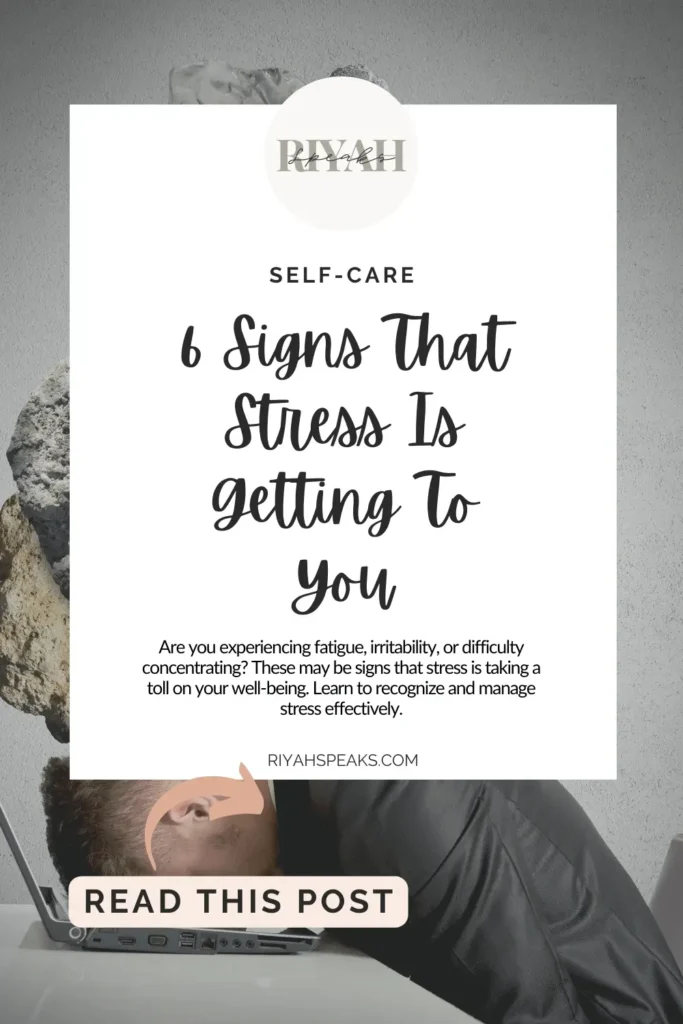
6 Signs That Stress Is Getting To You
Are you experiencing fatigue, irritability, or difficulty concentrating? These may be signs that stress is taking a toll on your well-being. Learn to recognize and manage stress effectively.

We all experience stress. Stress is not inherently an unhealthy thing. A stressful response to a stressful situation can energize us, make us more alert, and get us through it. We need to be more mindful when we have trouble turning off these responses or feel them happening in situations where they shouldn’t. Here are some signs that you’re experiencing more stress than you should and what you can do about it.
How To Know When You’re Too Stressed
You’re not getting enough sleep
The link between mental health and sleep is very well documented. In particular, stress and sleep disorders can have a cyclical relationship with one another. Stress makes us sleep less, and a lack of sleep reduces our ability to control the production of cortisol, frequently dubbed the “stress hormone.” Make efforts to improve your sleep quality and quantity by creating a proper bedtime routine, closing out external stimuli, including monitors and TVs in the bedroom, and avoiding too much screen time too close to the bed. Improving your sleep can be a life-changer.
You’re experiencing back pain
There’s a third partner in the cyclical relationship mentioned above: pain. Especially back pain, but sometimes also joint pain. One of the physical symptoms of too much stress is that your muscles tend to tense more often. When they tense, this can put undue pressure on certain parts of the body, with the back and the joints being the most commonly affected, leading to problems with inflammation. Including more exercise in your day can help to lessen this inflammation, but you can also try getting more anti-inflammatories into your diet. Or what about making an appointment with a qualified chiropractor? They’ll be able to carefully manipulate your spine to reduce your joint and muscle pain without the need for medication. It’s best to simultaneously address the sleep, stress, and pain problems so that no part of the cycle is left unaddressed.
You’re getting headaches
Stress is also frequently connected to headaches, so often that there is a type of headache called a “stress headache.” Also known as a tension headache, this typically feels like pressure on either or both sides of the head, and you might feel tension in your upper body while they are going on. Over-the-counter painkillers can help mitigate these symptoms, but if you’re getting them more often, you should chalk it up to stress and see what you can do.
You’re losing control of your reactions
Do you feel like you’re getting more irritable lately? Do you find yourself in tears more often than usual? Stress can cause us to feel more emotionally heightened when faced with certain stimuli or psychological triggers. Sometimes, the reactions aren’t as dramatic; you might have a tougher time reacting to stressful circumstances or conversations and can lock down. If it’s getting to the point that it’s affecting your ability to maintain normal relationships and responsibilities, you should consider seeking treatment for anxiety. Amongst other things, this can help you manage your reactions to triggers more effectively

Your eating habits are changing
You may well have heard of stress eating before. It’s not just a trope in TV and movies. It’s a real thing. When our body releases more cortisol, a common symptom of stress, our body typically craves food, especially starchy and sweet foods. However, that’s not the only way the appetite can react to stress. The immediate stress response is to produce a hormone that releases corticotropin, suppressing our appetite. Tracking your dietary habits is a good way to see if there have been any unintended changes as of late, which could be a sign of a stress problem that needs to be managed.
Your libido has changed
Stress can temporarily change our hormonal makeup, and these effects can become more pronounced and longer-lasting when we’re under chronic stress. One of the most common responses to stress is decreased libido or sexual appetite. This can result in unintended relationship consequences, not just for the individual, which can become a stressor. As such, it may be necessary to communicate your trouble with stress to your partner and to take further steps as recommended above to address it.
If you’re starting to experience chronic stress, do not try and tough it out. This is rarely good for you in the long term, as your stressed mindset can linger long after you’ve cleared away the stressful circumstances and stimuli. You need to address both the causes and the problem itself.
Final Thoughts
it is crucial to pay attention to the signs that stress is taking a toll on your mental and physical well-being. By recognizing these signs, you can take proactive steps to manage and reduce stress. Remember, self-care, relaxation techniques, and seeking support are key to maintaining a healthy balance and finding inner peace amidst life’s challenges. Prioritize your well-being and prioritize self-care to cultivate a healthier and more fulfilling life.