
08 Dimensions Of Self-Care: What is Emotional Well-Being?
Discover the essence of emotional well-being, inner balance, and resilience. Explore its importance and how it contributes to a fulfilling and meaningful life.
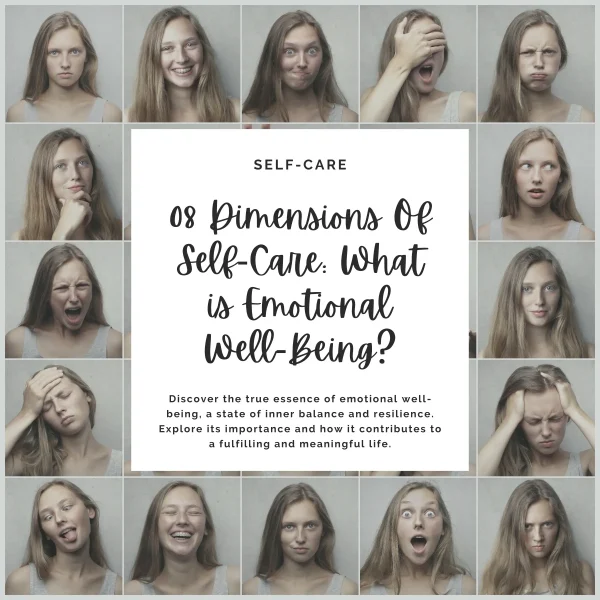
Have you ever felt so angry that you cried? Have you ever felt so happy it made you feel sick? If so, me too. Learning to manage and take care of your emotions is essential, so I’m writing this article on emotional well-being.
It’s normal to experience negative emotions once in a while. Emotions play an essential role in how we think and behave. Daily feelings can compel us to take action and influence our life decisions. It affects how we practice self-care and love, so I’ve chosen emotional well-being as the blogging theme for March. This article will introduce emotional well-being and explain why it’s essential.
What is Emotional Well-being?
Emotional well-being is one of the 08 dimensions of self-care. It focuses on how you cope with your thoughts and emotions. Like mental well-being, the phrase emotional well-being or health can easily be used in conversation, even if no one knows the term’s meaning. Emotional well-being refers to how one focuses on improving emotional health and overall happiness. It encompasses understanding and managing emotions effectively, maintaining positive relationships, and coping with life’s challenges healthily. While “emotional well-being” has been used for many years, its significance has recently gained more attention as society recognizes the importance of mental and emotional health. In today’s fast-paced and stressful world, emotional well-being is crucial for individuals, communities, and cultures. It influences our relationships, work productivity, and overall quality of life, emphasizing the need to prioritize emotional well-being and promote mental health initiatives.
The Difference Between Emotional Well-Being And Mental Health
I know what you’re probably thinking.
Isn’t emotional wellness and mental health the same thing?
No, they’re not the same, but they do go hand-in-hand.
Emotional well-being and mental health are closely related but distinct concepts. While mental health encompasses a broader range of mental and emotional states, emotional well-being refers to the quality of one’s emotional state. Emotional well-being focuses on the individual’s ability to recognize and understand their emotions, effectively manage them, and experience a sense of balance and contentment in their vibrant life. Another word to describe adequately managing your emotional health is having greater emotional intelligence.
Mental health, on the other hand, encompasses a broader spectrum of psychological well-being, including cognitive function, behavior, and overall mental state. It includes mood disorders, anxiety, and other mental illnesses. While emotional well-being is a component of mental health, mental health encompasses a broader range of factors and conditions that affect a person’s overall mental well-being. Emotional and mental health are crucial aspects of our overall well-being, and nurturing both is important for a fulfilling and balanced life.
Emotional Health And Self-Care
Emotional health plays a significant role in our daily lives. It refers to our ability to recognize, understand, and manage our emotions healthily and balanced. Emotional self-care involves intentionally maintaining happiness, growing emotional intelligence, embracing vulnerability, and becoming more empathetic. Engaging in self-care practices targeted explicitly at our emotional well-being helps us build resilience, cope with stress, foster positive emotions, and avoid becoming emotionally overwhelmed. It can involve practicing mindfulness, journaling, seeking social support, engaging in hobbies, and setting healthy boundaries. By prioritizing self-care and tending to our emotional health, we enhance our ability to navigate challenges, improve our relationships, and lead more fulfilling lives. Taking care of our emotional well-being through various life-changing spiritual self-care practices is an investment in our happiness and quality of life.
How To Practice Emotional Self-Care
Practicing emotional self-care involves intentionally nurturing and prioritizing our emotional well-being. It starts with developing self-awareness and understanding our emotions. This can be achieved through journaling, meditation, or talking to a trusted friend or therapist. Regular self-reflection helps us identify our needs, triggers, and thought patterns. Additionally, setting boundaries is crucial to protect our emotional well-being. This may involve saying no when necessary, establishing healthy limits in relationships, and creating a safe space for ourselves.
Taking care of our physical health also contributes to emotional well-being, as exercise, adequate sleep, and a balanced diet positively impact our mood and energy levels. Engaging in activities that bring us joy and relaxation, such as hobbies or time in nature, can reduce stress and promote emotional balance. Lastly, seeking support and connection with others is vital. Sharing our feelings, seeking guidance, and surrounding ourselves with a supportive community can provide a sense of validation, empathy, and encouragement. By practicing emotional self-care, we empower ourselves to manage our emotions more effectively, foster resilience, and cultivate greater well-being.


Why is Emotional Self-Care Important?
Self-care is vital because it helps you maintain a healthy relationship with your physical, emotional, spiritual, and mental selves. It allows you to produce happiness and transmit those feelings to the people around you.
With emotional self-care, you’re taking the time to reflect, analyze, and deal with your innermost feelings. Emotional self-care is essential to managing your overall emotional well-being. Without emotional self-care, you’d be pent up with negative emotions and on the verge of exploding all the time.
Emotional self-care is crucial because it allows us to prioritize our emotional well-being and cultivate a healthy relationship with our emotions. By engaging in practices that support and strengthen our emotional health, we can better understand, process, and express our feelings. This helps us develop resilience, manage stress, and navigate life’s challenges more easily. Emotional self-care empowers us to set boundaries, practice self-compassion, and engage in activities that bring us joy and fulfillment. It enhances our self-awareness, effectively identifying and addressing emotional needs. Emotional self-care promotes healthier relationships as we become more attuned to our emotions and better equipped to empathize. By nurturing our emotional well-being through self-care, we can cultivate inner peace, balance, and happiness.
Final Thoughts
Emotional well-being is a vital aspect of our overall health and happiness. It encompasses our ability to understand, manage, and express our emotions healthily and constructively. Self-care is crucial in maintaining emotional well-being, especially when our emotions are in turmoil. Taking time for self-care activities that nurture our emotional health can give us the tools and resilience to navigate life’s ups and downs. It’s essential to recognize the distinction between emotional and mental health, as they are interconnected yet distinct. While emotional self-care can address temporary fluctuations in our emotional well-being, it’s equally important to seek professional help if our emotional or mental health requires additional support. By prioritizing self-care and being attuned to our emotional needs, we can foster greater emotional well-being and live more fulfilling lives.





Very important information! I am going to learn more about emotional wellbeing to write about it on my blog! Thank you for sharing!
Great post Riyah! So often we try to push away uncomfortable emotions, but having a healthy relationship with all of our emotions is so important to our overall wellbeing. Thanks for sharing!
YES! we need to start talking more about having more conversations about our emotions, managing them, and how we can healthily deal with them.